
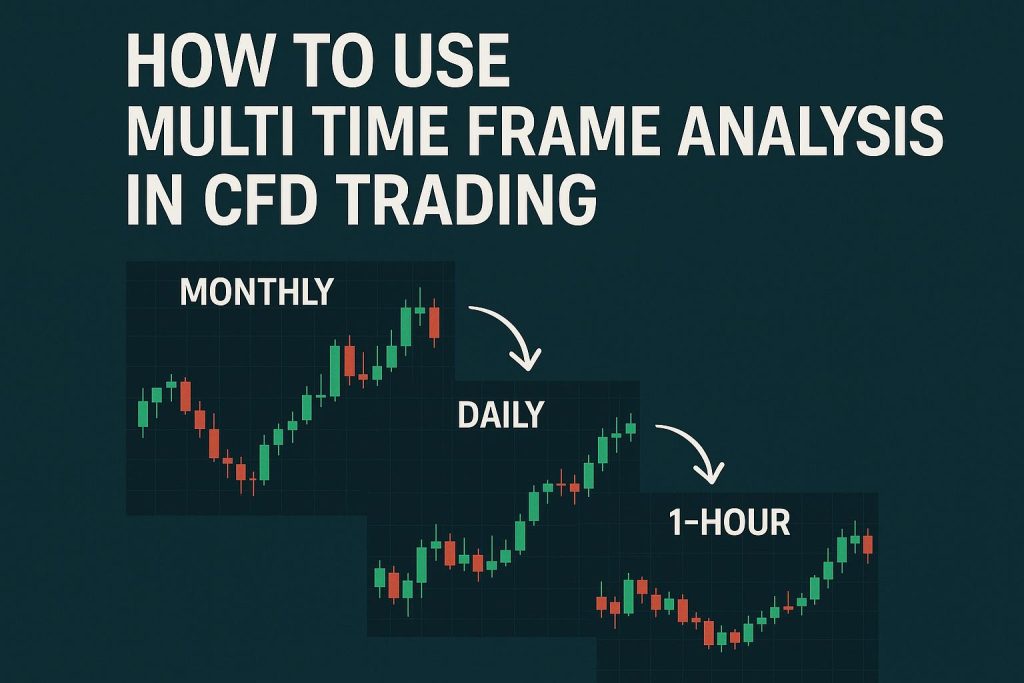
Introduction to Multi Time Frame Analysis in CFD Trading
Multi time frame analysis is a crucial technique in Contract for Difference (CFD) trading that involves examining the same market across different time frames. This approach helps traders gain a comprehensive view of market trends, determine optimal entry and exit points, and manage risk more effectively. Understanding how to utilize multiple time frames can significantly enhance your trading strategy and decision-making process.
Understanding Time Frames
In CFD trading, time frames refer to the duration of each candlestick or bar on a price chart. Common time frames include short-term (such as 5-minute and 15-minute charts), medium-term (such as hourly and 4-hour charts), and long-term (such as daily, weekly, and monthly charts). Each time frame provides a unique perspective on market dynamics. By analyzing the interplay between these different time frames, traders can develop a more nuanced understanding of the market and make more informed trading decisions.
The selection of the appropriate time frame is influenced by a trader’s individual trading style and objectives. Short-term traders, for instance, might concentrate on 5-minute to hourly charts to exploit intraday price movements, while those with a longer-term perspective could prefer daily or weekly charts to capture broader trends. The combination of these varied perspectives adds depth to the analysis and supports a more comprehensive market strategy.
How to Implement Multi Time Frame Analysis
While the specific implementation of multi time frame analysis can vary, a basic strategy involves the following steps:
1. Identify the Primary Time Frame
The primary time frame is where you focus most of your analysis. For many traders, this is often a daily or hourly chart. This time frame aligns with your overall trading strategy and helps you to identify broader trends. This step is vital because the primary time frame acts as the foundation upon which the entire analysis is built. It serves as the reference point for evaluating market direction and making strategic decisions.
2. Analyze Higher and Lower Time Frames
Once you have identified your primary time frame, you should analyze both higher and lower time frames:
- Higher Time Frame: This is used for trend confirmation. For instance, if your primary time frame is an hourly chart, consider a daily chart to confirm the overall trend direction. Observing the higher time frames gives a perspective on the larger economic or market drivers that might be influencing the current trend.
- Lower Time Frame: These charts are useful for pinpointing precise entry and exit points. For instance, if your primary time frame is an hourly chart, a 15-minute chart can provide detailed insights into recent price movements. Such granularity is essential for optimizing entry and exit strategies, allowing for better timing and potentially improved trade profitability.
The interplay between these time frames helps traders avoid entering trades based solely on minor fluctuations or insignificant market noise that may not reflect the broader market trend.
3. Look for Confluence
Confluence occurs when signals from multiple time frames align, increasing the probability of a successful trade. For example, if both the daily and hourly charts indicate an upward trend, this alignment strengthens your trade’s potential. Confluence can serve as a powerful tool for confirming market analysis, providing confidence in the accuracy of the trends being observed and the strategies being employed. It helps in filtering out false signals and enhances the reliability of trading decisions.
Benefits of Multi Time Frame Analysis
There are several benefits to using multi time frame analysis in CFD trading:
Enhanced Trend Identification: By examining different time frames, traders can validate trends more effectively. Having multiple confirmations of a trend increases the likelihood that the identified trend is genuine and not a short-term anomaly.
Improved Trade Timing: Observing multiple time frames helps in timing entries and exits more precisely, potentially leading to better trade outcomes. This advantage is crucial in optimizing profits and minimizing losses, providing traders with a strategic edge in the fast-moving CFD market.
Comprehensive Market Understanding: Multi time frame analysis provides a well-rounded view of the market, allowing traders to make informed decisions regardless of market conditions. This holistic perspective enables traders to understand market movements more clearly and adapt their strategies to accommodate various market scenarios effectively.
Challenges and Considerations
While multi time frame analysis is beneficial, it also presents challenges:
Complexity: Analyzing multiple time frames can be complex and demands significant attention and understanding. The process requires synthesizing information from various time frames, which can sometimes be overwhelming for traders who are not well-versed with the technical aspects of the market.
Conflicting Signals: Different time frames may sometimes provide conflicting signals, requiring traders to use discretion and experience to interpret them correctly. Beginners might find it difficult to reconcile disparities between time frames, potentially leading to confusion and indecisive actions.
Moreover, the additional effort required to continually monitor multiple time frames can be demanding, both mentally and in terms of time. However, developing a structured approach and consistent practice can alleviate some of these challenges.
Conclusion
Incorporating multi time frame analysis into your CFD trading strategy can provide deeper insights into market movements and improve decision-making. It requires an understanding of how different time frames interact and the discipline to apply this analysis consistently. By mastering this approach, traders can enhance their ability to capitalize on market opportunities effectively. To effectively manage the inherent complexity, traders need to develop strong analytical skills and maintain a disciplined approach to studying the interactions between different time frames.
For further reading on trading strategies and analysis methods, consider exploring resources like BabyPips and Investopedia, which offer comprehensive guides and tutorials on various trading techniques and approaches. These platforms can be invaluable resources in expanding knowledge and refining skills in multi time frame analysis and beyond.
This article was last updated on: October 16, 2026