
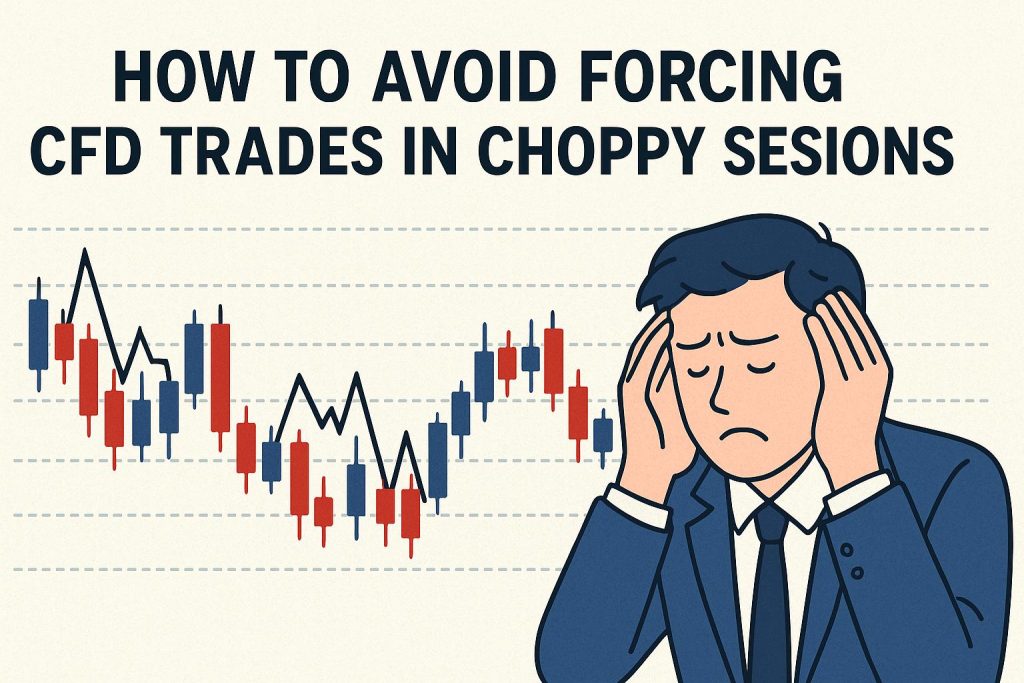
Understanding Choppy Sessions in CFD Trading
In the complex landscape of CFD (Contract for Difference) trading, market participants frequently encounter a particular market state known as choppy sessions. These sessions represent a challenge due to their lack of clear upward or downward trends, often resulting in indecision and impulsive trading actions. For successful navigation and the mitigation of associated risks, it is essential for traders to fully grasp the nature of these market conditions.
Defining Choppy Sessions
Choppy sessions are characterized by erratic, sideways market movements. During these sessions, price action fails to establish a definitive trend direction over a period, moving unpredictably back and forth. This environment can make it difficult for traders to identify reliable signals for entering or exiting trades. As such, choppy sessions tend to obscure usual patterns and signals that traders might rely upon, complicating decision-making processes.
Choppy sessions typically arise from a variety of factors including mixed news releases, periods of investor uncertainty, or low market liquidity. These conditions can blur the lines between bullish and bearish sentiments, making it unclear whether prices are likely to rise or fall. For traders, this can mean that distinct, clear-cut trading signals that inform entry and exit points are in short supply. Consequently, understanding when and why these sessions occur is pivotal for effective CFD trading.
Strategies to Avoid Forcing Trades
One of the biggest challenges that traders face during choppy sessions is the impulse to execute trades despite unclear market directions. It is vital for CFD traders to remain disciplined and patient during these times to avoid engaging in unnecessary risks. Several strategic approaches can be employed to mitigate impulsive trading in such unstable markets.
1. Adhere to a Trading Plan
Maintaining adherence to a well-thought-out trading plan is crucial for avoiding hasty decisions. A comprehensive trading plan acts as a guiding framework or blueprint, detailing specific criteria for entering and exiting trades, outlining risk management protocols, and defining clear trading objectives. By sticking resolutely to this plan, traders can resist the temptation to deviate based on short-lived sentiments or unclear market signals often characteristic of choppy sessions.
2. Incorporate Technical Indicators
Using technical indicators can offer critical insights during choppy markets. Tools like the Relative Strength Index (RSI) and Moving Average Convergence Divergence (MACD) help traders detect overbought or oversold conditions, signaling when caution may be necessary. Although useful, it is important to integrate these indicators with broader market analysis to avoid over-reliance. By combining multiple forms of analysis, traders can improve the accuracy of their market predictions.
3. Implement Risk Management Practices
Effective risk management stands as a cornerstone of successful trading, particularly during unpredictable sessions. By establishing stop-loss and take-profit levels as part of a broader trading plan, traders can limit potential financial losses and curb emotional reactions to rapid market changes. These measures act as predefined exit points that shield traders from making irrational decisions in response to momentary market fluctuations.
Adjust Position Sizes
During choppy sessions, another prudent risk management tactic is to adjust position sizes. Reducing the size of positions limits exposure to the volatile market, thereby minimizing potential losses. Smaller position sizes mean capital is less tied up and susceptible to adverse market shifts, allowing traders to maintain a steadier mindset and avoid significant disruptions to their overall trading strategy.
4. Maintain a Trading Journal
Keeping an ongoing trading journal serves as a reflective practice enabling traders to analyze their performance over time. Meticulously recording the rationale behind entering and exiting trades and assessing outcomes offers invaluable insights. Over time, this practice sheds light on behavioral patterns and decision-making strengths or weaknesses, particularly when faced with choppy markets. Reviewing journal entries from past experiences can help traders refine their strategies and instill a level of caution and introspection beneficial for future sessions.
Conclusion
In conclusion, mastering CFD trading, especially during choppy sessions, calls for a blend of strategic discipline, analytical insight, and methodical planning. By adhering strictly to a predetermined trading plan, utilizing technical indicators in a balanced manner, enforcing robust risk management practices, and maintaining a comprehensive trading journal, traders substantially reduce risks associated with impulsive trading decisions. These strategies collaboratively serve to preserve capital and empower traders, positioning them for enduring success despite the market’s unpredictable nature. Understanding and effectively addressing choppy sessions is indispensable for any trader aiming to navigate the world of CFD trading proficiently.
This article was last updated on: August 25, 2026