
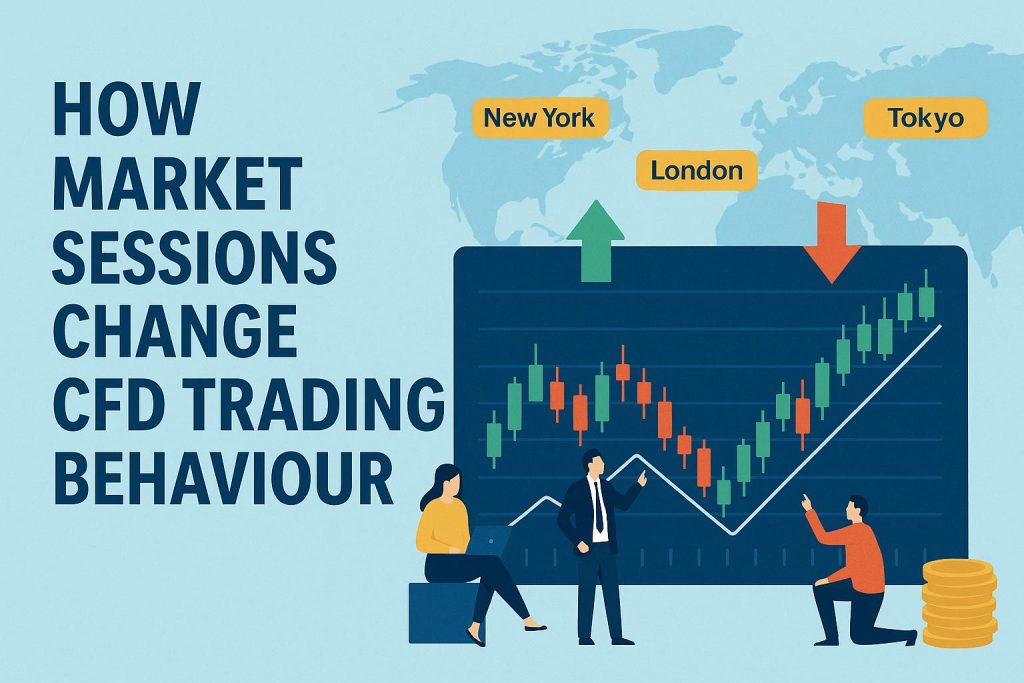
Understanding Market Sessions and Their Impact on CFD Trading
Contract for Difference (CFD) trading involves speculating on the price movements of various assets without actually owning them. One significant factor influencing CFDs is the timing of different market sessions around the world. This article explores how these sessions affect CFD trading behavior and delves into the nuances to provide a comprehensive understanding.
The Basics of CFD Trading
CFD trading is a popular form of derivative trading that allows individuals to trade on the price changes of various financial instruments such as stocks, commodities, indices, and more. The key concept is that traders speculate on the direction of the market’s movement rather than owning the actual asset. By predicting whether an asset’s price will rise or fall, traders can profit from both upward and downward trends.
One of the primary factors impacting CFD trading is price volatility. High volatility means more significant price movements, offering potential opportunities for traders to make profits. Conversely, low volatility results in smaller price swings, which might restrict lucrative opportunities but can be advantageous for stable strategies.
Liquidity is another crucial element, referring to how quickly and easily an asset can be bought or sold in the market without affecting its price. High liquidity suggests that there are many buyers and sellers, leading to narrower spreads and more efficient trading.
Lastly, the trading hours of financial markets worldwide play a critical role since they define when a particular asset can be traded. Understanding the correlation between market sessions and their timing becomes paramount to formulating effective trading strategies in CFD trading.
Global Market Sessions
The global financial landscape consists of various market sessions that are geographically defined and function in staggered time zones. These global market sessions are typically categorized into three primary groups based on their location: the Asian, European, and North American sessions. Each session exhibits unique features affecting CFD trading activity.
Asian Session: The Asian session consists of major financial hubs such as Tokyo, Hong Kong, and Sydney. It is one of the quieter market sessions in terms of trading volume and volatility. Due to its relatively stable nature, traders may encounter fewer trading opportunities. However, those who prefer less erratic price movements might find this session appealing for implementing long-term strategies.
European Session: This session includes leading financial centers like London, Frankfurt, and Paris. Known for its increased liquidity and heightened volatility, the European session often offers a wealth of trading opportunities. It kicks off with the close of the Asian markets and extends until the North American session begins. This overlap creates a fertile ground for traders seeking to capitalize on potential market movements.
North American Session: Dominated by significant markets in New York and Toronto, the North American session is marked by high liquidity and volatility, similar to the European session. The overlap of the North American and European sessions further intensifies trading activity, making it a prime period for CFD traders searching for rapid price changes.
Impact on Trading Behavior
The timing of these global market sessions directly influences the behavior and strategies of CFD traders. An understanding of these impacts can enhance a trader’s ability to make informed decisions.
Volatility Patterns: Overlapping periods between market sessions, such as the European and North American markets, are typically characterized by significant fluctuations in asset prices. These volatility patterns open opportunities for traders to exploit potential price movements. By analyzing historical data and market trends, traders can formulate strategies to harness this volatility effectively.
Liquidity Considerations: Liquidity is not uniform throughout different market sessions. The European and North American sessions exhibit the highest liquidity levels, allowing traders to enter and exit trades more easily and with competitive spreads. This maximized liquidity provides an excellent environment for executing large-volume trades without experiencing excessive slippage.
Strategic Timing: Given the varying characteristics of each market session, traders often develop strategies aligned with specific session timings. For instance, those who favor stable and less volatile conditions might concentrate their efforts on the Asian session. On the opposite spectrum, traders aiming to leverage quick and substantial price swings might focus on the European and North American sessions, where volatility is typically higher.
Resources for Further Learning
For traders keen on gaining a deeper comprehension of CFD trading and the influence of global market sessions, numerous resources are available. Reputable financial education platforms offer comprehensive tutorials, articles, and courses that cover various facets of CFD trading, including market analysis, risk management, and strategy development. In addition, brokerage firms provide tools, platforms, and real-time data to assist traders in refining their strategies and effectively navigating the complexities of market sessions.
Conclusion
The global market sessions, with their distinct characteristics and timings, play a pivotal role in shaping the trading strategies of CFD traders. A thorough understanding of the session-specific dynamics allows traders to tailor their approaches, optimizing trading potential. Whether by capitalizing on the high volatility and liquidity during overlapping sessions or by employing techniques catered for steadier markets, the success of CFD trading often hinges on strategic timing. By aligning trading activities with the rhythm of global market sessions, traders can enhance their prospects for achieving favorable outcomes in the dynamic world of CFD trading.
This article was last updated on: May 8, 2026