
Understanding CFD Watchlists
In the complex world of trading, Contracts for Difference (CFDs) have emerged as a popular financial instrument. The appeal of CFDs lies in their ability to allow traders to speculate on the price movements of various assets without actually owning them. This aspect of trading inherently requires a robust strategy and careful monitoring of the market, which is where a structured CFD watchlist becomes particularly beneficial.
Purpose and Importance of CFD Watchlists
A CFD watchlist is not merely a collection of asset names and numbers. It is a strategic tool that allows traders to focus their attention, streamline decision-making, and refine their trading strategies. The core purposes of a CFD watchlist include:
Focus and Efficiency
Constructing a CFD watchlist helps traders narrow their focus to a select group of assets. This concentration is critical, particularly in a market teeming with countless instruments across different sectors. By concentrating on a curated selection, traders can avoid the paralyzing effect of having too many options and instead hone in on the assets that align with their strategy. This watchlist also serves as a consolidated source of relevant data, facilitating swift decision-making as traders no longer need to juggle multiple platforms or spreadsheets to gather the necessary information.
Strategy Refinement
Beyond concentrating efforts, a watchlist aids in evaluating the efficacy of trading strategies. Traders can closely monitor how their chosen strategies perform against the selected assets. This facilitates continuous learning and adaptation, allowing for the tweaking of strategies based on real-time outcomes and performance metrics.
Building an Effective CFD Watchlist
The creation of a CFD watchlist goes beyond merely listing assets. It involves careful selection, organization, and the integration of analytical tools.
Asset Selection
Selecting the right assets is foundational. Traders should consider various factors to ensure that their watchlist aligns with their trading ethos:
Liquidity and Volatility
Opting for highly liquid markets is crucial as it ensures that traders can enter and exit positions with ease, minimizing the impact of market slippage. Alongside liquidity, understanding the volatility of an asset is essential. While high volatility can introduce potential for larger gains, it comes with increased risk. Traders need to balance these factors based on their risk appetite and trading strategy.
Correlation
Asset correlation refers to how different assets move in relation to each other. Diversification is a key principle in risk management, and including assets with low (or negative) correlation can help mitigate risk. By understanding correlation dynamics, traders can construct a watchlist that is resilient to market shifts, thereby protecting their portfolio’s overall integrity.
Organization of the Watchlist
An organized watchlist is far more efficient and useful than a chaotic one. Here are some organizational approaches:
Categorization and Prioritization
Arranging assets according to categories such as equities, commodities, or indices facilitates better analysis. This separation allows traders to apply category-specific analytical techniques and maintain clarity. Additionally, setting priority levels is essential, ensuring that traders can devote attention to assets that demand immediate action due to market conditions or personal strategy triggers.
Detail Inclusion
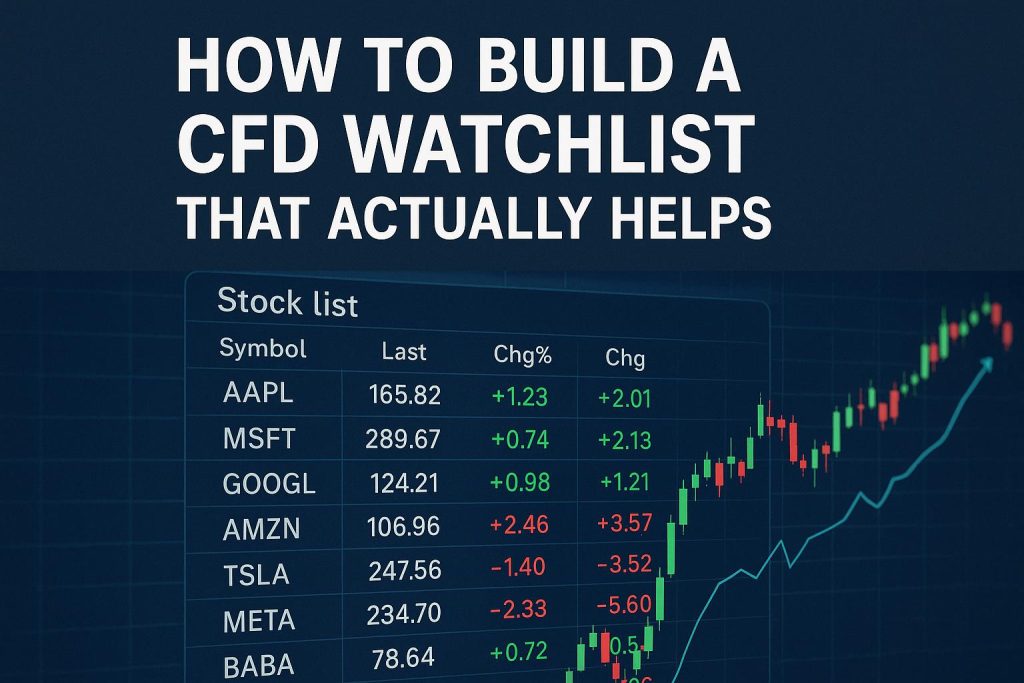
A well-rounded watchlist should include essential data beyond just asset names. Incorporating information like asset symbols, current pricing, historical performance, and any significant news updates grants traders comprehensive insight at a glance.
Integration of Analytical Tools
Enhancing the capabilities of your watchlist can be achieved by integrating various tools and indicators:
Technical Indicators
Incorporating technical indicators such as moving averages or the Relative Strength Index (RSI) can offer valuable insights into price patterns and momentum shifts. These indicators can assist traders in predicting potential market reversals or confirming trends.
News and Alerts
Linking the watchlist to reliable news sources or setting up alerts can keep traders informed about events or changes that might impact their chosen assets. This timely flow of information is critical in making informed decisions swiftly.
Charting Tools
Visual representations of price movements through charts are invaluable. Charting tools that offer different visual cues like candlesticks or volume bars can help in quickly assessing asset performance and potential opportunities.
Maintaining and Updating Your Watchlist
The financial markets are inherently dynamic, necessitating a flexible and regularly updated watchlist. Traders should consistently review their watchlist, adapting to changes in market conditions, economic indicators, and personal objectives. A watchlist that adapts with market movements and strategy modifications ensures that traders remain prepared and proactive rather than reactive.
Conclusion
In conclusion, a well-structured CFD watchlist is an essential tool for traders aiming to enhance their efficiency and decision-making capabilities. Through careful selection, organization, and the integration of analytical tools, a watchlist can evolve from a basic list of assets into a comprehensive and strategic resource that supports successful trading. Adapting the watchlist to changing markets and strategies not only ensures immediate relevance but also reinforces trading discipline and foresight.
This article was last updated on: April 10, 2026